Digital banking has transformed how Americans manage their money, and because of this rapid shift many users ask an essential question: are digital banks safe? As more people consider moving from traditional institutions to online-only banks, concerns about protection, fraud prevention and federal insurance become central to the decision-making process. This article explains the facts using reliable and official information.
Although digital banks operate without physical branches, they follow strict federal regulations. Moreover, many of them partner with FDIC-insured institutions to safeguard deposits, and therefore they offer a level of protection comparable to well-known brick-and-mortar banks. Still, consumers must understand how these protections work before transferring their funds.
Additionally, the digital environment brings unique risks. Even though most platforms use advanced encryption and multi-factor authentication, cyber threats exist and change frequently. Because of this constant evolution, users must know how to evaluate whether a digital bank meets essential safety standards.
This guide explains everything in depth so you can make an informed and confident decision. If you want clarity supported by facts, continue reading to discover what really matters when choosing a digital bank.
Are Digital Banks Safe? Understanding Federal Protections
Consumers often compare digital banks with traditional banks to understand which one offers stronger protection. The truth is that most reputable digital banks follow the same federal rules. Although they operate differently, they must comply with U.S. banking laws.
FDIC Insurance Basics
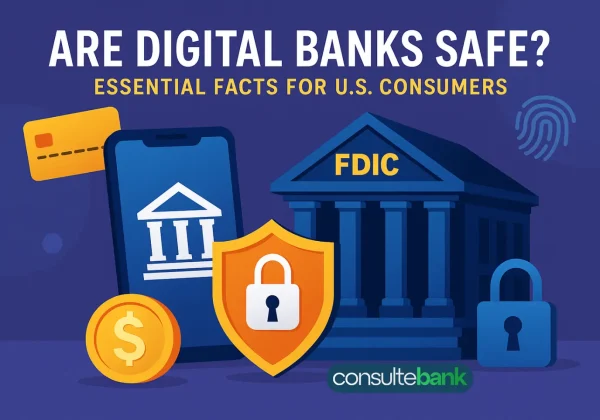
The Federal Deposit Insurance Corporation (FDIC) protects consumers’ deposits up to $250,000 per depositor, per insured bank, per ownership category. This protection applies whether the bank is digital or has physical branches. Consequently, any digital bank operating under or partnering with an FDIC-insured institution guarantees the same coverage.
To confirm FDIC status, users should search for the bank on the FDIC BankFind tool. Because some digital banks use partner institutions, consumers must verify both the brand and the issuing bank to ensure proper protection.
How Partner Banks Work
Many digital banking brands are technically financial technology companies (fintechs). They design user-friendly interfaces but do not hold deposits directly. Instead, they partner with regulated institutions that provide FDIC insurance. This structure is common and safe when the issuing bank is confirmed.
Examples include:
- Fintech brand → FDIC-insured partner bank
- Banking app → chartered institution handling deposits
Because customers sometimes confuse a fintech brand with a full bank, checking the legal information on the company’s website helps avoid misunderstandings.
Are Digital Banks Safe? Security Standards and Technology
While federal insurance protects deposited funds, digital banks rely heavily on advanced cybersecurity systems. Since they operate entirely online, they invest heavily in digital security.
Encryption and Data Protection
Reputable digital banks use strong encryption protocols to protect data transmitted between the user’s device and the bank’s servers. This encryption makes it extremely difficult for unauthorized parties to intercept or manipulate information.
Additionally, many institutions implement:
- Continuous monitoring
- Automatic fraud detection
- Device fingerprinting
- AI-based anomaly analysis
These tools significantly reduce risks. Because the systems adapt over time, they detect unusual activity faster than many traditional banks’ older platforms.
Multi-Factor Authentication (MFA)
MFA requires users to confirm their identity through more than one method. Therefore, even if someone obtains a password, unauthorized access is still unlikely. MFA usually includes:
- SMS verification codes
- Authentication apps
- Biometrics (fingerprint or face ID)
- Email confirmations
Digital banks typically make MFA mandatory because the security benefits outweigh any minor inconvenience for the user.
Account Alerts and Real-Time Monitoring
Most digital banking apps provide instant notifications for every transaction. This feature allows users to respond rapidly if suspicious activity occurs. Because digital banks operate with real-time systems, fraudulent transactions can be detected sooner.
Are Digital Banks Safe? Operational Risks to Consider
Although digital banks follow federal requirements, consumers must analyze operational practices. Awareness helps minimize mistakes and strengthens account safety.
No Physical Branches
The absence of branches can be a concern for users accustomed to face-to-face service. However, digital banks compensate with responsive customer support, chat systems and phone representatives. Additionally, they often provide faster in-app solutions for simple issues.
While the lack of branches does not affect deposit protection, it may influence overall convenience for some people.
System Outages and Downtime
Any online service can face temporary unavailability because of maintenance or unexpected outages. These events do not affect FDIC insurance or deposit safety, but they may prevent users from accessing their accounts temporarily.
When analyzing a digital bank, it is useful to review:
- Historical uptime performance
- Incident history
- Response speed and transparency
Banks committed to reliability usually publish service status dashboards or communicate proactively with customers.
Comparing Digital Banks With Traditional Banks
To understand safety thoroughly, consumers must compare both models objectively. Although traditional banks provide in-person service, many digital banks outperform them in several areas related to security.
Cost Structure and Technology
Digital banks usually operate with lower costs because they do not maintain physical facilities. As a result, they can invest more in digital infrastructure, fraud detection systems and cybersecurity.
Additionally, many digital banks adopt new technologies faster, including acceleration in updates and continuous system improvements. Traditional banks sometimes rely on older legacy systems, which may slow down certain modern security implementations.
Fraud Prevention Efficiency
Because digital banks rely entirely on technology, their fraud detection systems are often more adaptive. They monitor transactions in real time and compare patterns automatically. Traditional banks do this as well, but the digital-first approach generally allows faster detection.
Customer Control and Transparency
Digital banks typically offer dashboards with detailed analytics, spending trackers and instant alerts. These tools help consumers identify suspicious activity immediately. Traditional banks vary widely in their digital features, and some still offer limited app functionalities.
Evaluating Whether a Digital Bank Is Legitimate
Consumers should take several steps to evaluate safety thoroughly. These checkpoints help ensure that the institution is legitimate, well-regulated and secure.
Verification Checklist
FDIC Verification
Always confirm whether the institution is FDIC-insured using the official FDIC BankFind directory.
Licensing and Disclosures
Reputable digital banks clearly disclose:
- The issuing bank
- Legal name
- Regulatory information
- Deposit insurance details
- Terms and conditions
Security Policy Review
Analyze the bank’s website for information on:
- Encryption standards
- MFA options
- Privacy policy
- Fraud resolution procedures
Customer Support Quality
Reliable institutions offer:
- 24/7 support
- Clear dispute resolution channels
- Transparent timelines
Since support quality improves user safety, this is an essential factor.
Practical Safety Tips for Digital Banking Users
Even with strong protections, users must adopt safe habits. Because criminals often target individuals rather than breaking into banking systems, personal vigilance is essential.
Enable All Security Features
Activating MFA, customizing alerts and using device locks all reduce risks. Although these steps take only seconds, they significantly increase account protection.
Avoid Public Wi-Fi for Banking
Public networks expose users to potential interception. Whenever possible, they should use cellular data or secure private networks.
Keep Devices Updated
Regular software updates patch vulnerabilities. Consequently, users should update:
- Operating systems
- Banking apps
- Browsers
- Security tools
Monitor Account Activity Frequently
Because digital banks provide instant alerts, any suspicious activity becomes visible quickly. Prompt reporting helps institutions freeze accounts and investigate problems faster.
Benefits of Choosing a Safe Digital Bank
Although safety is the main concern for many users, digital banks offer additional advantages that influence the final decision.
Lower Fees and Simplified Structures
Most digital banks operate with minimal or zero monthly fees. They also avoid common charges such as overdraft fees or minimum balance requirements.
User-Friendly Interfaces
Digital banks focus on app usability. Therefore, their platforms tend to be intuitive, modern and convenient for everyday transactions.
Faster Transfers and Processing
Because digital banks optimize internal systems, transfers and payments often process quickly. Instant notifications also enhance user confidence.
Tools for Financial Management
Budgeting features, automatic savings and insights help users manage finances more efficiently. Although traditional banks may offer similar tools, digital platforms often provide more advanced versions.
Conclusion
Final Thoughts on Digital Bank Safety
Digital banks can be as safe as traditional banks when they operate under FDIC-insured institutions and follow strong security practices. Although some risks exist, they are manageable when users follow essential safety measures and choose reputable platforms. Because the financial landscape continues to evolve, digital banks increasingly adopt advanced technologies, transparent systems and real-time monitoring.
Therefore, well-informed consumers can use these institutions confidently and benefit from their modern features while maintaining full protection of their funds.
Sources
- https://www.fdic.gov
- https://www.consumerfinance.gov
- https://www.ftc.gov
- https://www.occ.treas.gov
- https://www.sec.gov
📌 Leia também:
Best Credit Cards Best Digital Banks in the USA No annual fee cards USA👉 Continue lendo o Consulte Bank