The term FDIC insured banks has become essential for anyone who wants to protect their money in a growing digital banking environment. Because digital banking continues to expand, consumers need reassurance that their deposits remain safe under federal protection. Therefore, understanding which financial institutions offer strong insurance and reliable digital services is vital for making smart financial decisions.
Although the market is full of online banking options, not all institutions operate with the same level of security. Consequently, choosing an FDIC-insured digital bank ensures that your funds remain covered in case the institution fails. This is why more users now prioritize safety certifications before opening an account.
Because financial security is non-negotiable, this article will guide you through how FDIC insurance works, which digital banks offer the strongest protections, and what features truly matter. You will also discover important comparisons and insights to help you make an informed decision. For a complete and safe financial journey, continue reading.
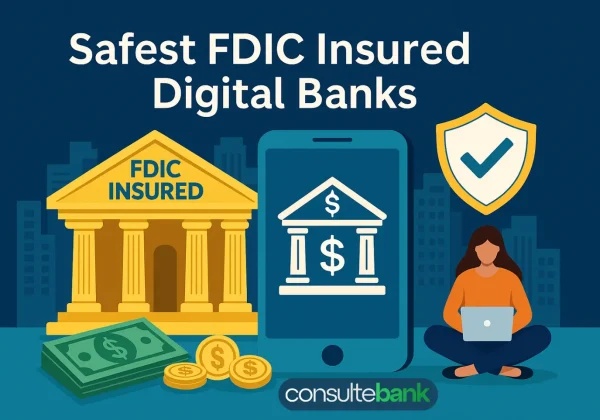
FDIC insured banks: understanding the essentials
Digital banking has changed how Americans handle their money. However, even with convenience, trust remains a primary concern. Therefore, understanding how the Federal Deposit Insurance Corporation (FDIC) protects depositors is the first step in choosing the safest institutions.
The FDIC is an independent federal agency created in 1933 to stabilize the banking system. Although it initially focused on traditional banks, it now insures many digital banking partners as well. Because online institutions often operate through partner banks, consumers must verify that the underlying bank—not only the app—is FDIC insured.
What FDIC insurance covers
FDIC insurance protects deposits up to $250,000 per depositor, per insured bank, per account ownership category. Additionally, this coverage applies automatically; consumers do not need to purchase it. The FDIC covers:
- Checking accounts
- Savings accounts
- Money market deposit accounts
- Certificates of deposit (CDs)
- Negotiable order of withdrawal (NOW) accounts
However, FDIC insurance does not cover investments such as stocks, bonds, mutual funds, or crypto assets, even if these products are purchased through a bank’s platform.
Why FDIC insurance matters for digital banks
Because many digital banks operate through fintech models, users must ensure their funds remain stored in an insured partner bank. While fintechs provide the interface, the FDIC-insured partner bank provides the security. Therefore, checking the partner institution is critical.
The safest FDIC-insured digital banks in the U.S.
Although many online banks operate today, only a select group is widely considered safe due to their FDIC coverage, platform reliability, and compliance record. Below are the top options for consumers seeking enhanced protection.
Chime
Chime works through two FDIC-insured partners: The Bancorp Bank, N.A. and Stride Bank, N.A.. Because both institutions maintain strong compliance records, Chime accounts qualify for full federal insurance.
Key features include:
- No monthly fees
- No minimum balance
- Early direct deposit
- Large ATM network
SoFi Bank
SoFi operates as its own FDIC-insured bank since obtaining a national bank charter in 2022. Therefore, deposits up to the FDIC limit remain fully protected. The platform offers:
- High-yield savings
- Automated budgeting tools
- Broad financial ecosystem
- Competitive APY rates
Ally Bank
Ally is one of the most established digital-only banks in the country. It is fully FDIC-insured and offers a strong combination of reliability and competitive interest rates.
Main highlights:
- 24/7 customer service
- Fee-free checking
- Solid savings APY
- Auto loans and investing options
Discover® Bank
Discover Bank is FDIC insured and provides strong digital banking features. Although known for its credit cards, it offers:
- Cashback checking
- No fees
- Competitive savings
Varo Bank
Varo became the first fintech to receive its own national banking charter, which makes it a fully FDIC-insured digital bank. Because it operates independently, user deposits are not held by partner banks.
Varo benefits include:
- No overdraft fees
- Competitive savings APY
- Full banking license
FDIC insured banks versus non-insured fintechs
Despite the rapid growth of fintech apps, not all platforms protect user funds with FDIC insurance. Therefore, comparing insured versus non-insured institutions is crucial.
Key differences
| Feature | FDIC-insured banks | Non-insured fintechs |
|---|---|---|
| Deposit protection | Yes, up to $250,000 | No insurance |
| Regulation | Strong federal oversight | Limited or third-party oversight |
| Account stability | High | Varies |
| Legal protection | Strong | Limited |
Legenda: Comparativo entre bancos com seguro FDIC e fintechs sem proteção de depósitos.
Because fintech apps often market attractive features, users may overlook the importance of insurance. Therefore, selecting FDIC-insured banks remains the safest option.
How FDIC insurance applies to digital banks with partner institutions
Although fintechs do not hold deposits directly, they work with banking partners that offer FDIC coverage. Understanding this relationship ensures users make informed decisions.
How partnerships work
- The fintech app provides the interface
- Deposits are stored in the partner bank
- The partner bank is FDIC insured
- Users receive full federal coverage
For example, Chime deposits are held at Stride Bank and The Bancorp Bank. Because both banks hold FDIC certificates, customer deposits are protected.
How to verify if a digital bank is FDIC insured
Even though most major digital banks clearly display their FDIC insurance status, consumers should always confirm using official sources.
Ways to verify
- Search the bank’s name on the FDIC BankFind Suite.
- Confirm the FDIC certificate number.
- Review the fintech’s website for partner bank disclosure.
- Check statements or account agreements.
Because fraudulent apps can mimic real banks, verifying ensures protection.
FDIC insured banks: additional security features to consider
Although FDIC insurance provides fundamental protection, users should look for extra security features when choosing a digital bank.
Important features
- Multi-factor authentication
- Strong encryption
- Real-time fraud alerts
- Account monitoring tools
- Biometric login
- Zero-liability debit protection
Because cyber threats continue to evolve, choosing a bank with strong digital safeguards strengthens your financial security.
Managing your accounts safely with FDIC-insured digital banks
Digital banking requires responsible usage. Although FDIC insurance protects your deposits, additional steps help maintain your account security.
Best practices
- Update passwords frequently
- Enable all security alerts
- Avoid using public Wi-Fi for financial access
- Monitor transaction history regularly
- Keep your device operating system updated
Because proactive security habits reduce risk, these practices complement your FDIC protection.
Comparing APY, fees, and mobile features among FDIC-insured digital banks
Although safety is the priority, users often compare digital banks based on fees, APY, and functionality. Below is a simplified comparison.
Comparison overview
| Digital Bank | FDIC Status | Fees | Savings APY | Mobile App Quality |
|---|---|---|---|---|
| Chime | Partner banks insured | No | Moderate | High |
| SoFi | Fully insured | No | High | High |
| Ally | Fully insured | No | Moderate | High |
| Discover | Fully insured | No | Moderate | High |
| Varo | Fully insured | No | High | High |
Legenda: Comparativo de bancos digitais com status de seguro FDIC, taxas, rendimento e qualidade do app.
Because APY and features evolve, users should verify the most recent information directly on the bank’s official website.
Choosing the right digital bank for long-term safety
Although all FDIC-insured banks offer federal protection, each option specializes in different categories.
Recommendations based on needs
- High APY: SoFi and Varo
- Best all-around: Ally
- Lowest fees: Chime
- Strongest customer support: Ally and Discover
- Full-service financial ecosystem: SoFi
Because every user has different priorities, aligning your needs with the right institution ensures long-term satisfaction and security.
Conclusion
Final considerations on FDIC-insured digital banks
Because financial safety is a growing concern, choosing FDIC-insured digital banks provides essential protection in a digital-first environment. Although many fintech apps appear convenient, only banks insured by the federal government can guarantee deposit coverage. Therefore, users should verify the institution’s FDIC status, analyze additional security features, and compare fees and benefits to select the best digital option.
As digital banking continues to expand, relying on FDIC-insured banks remains the smartest and safest choice.
Sources and further reading
- https://www.fdic.gov/resources/deposit-insurance/
- https://www.consumerfinance.gov/
- https://www.sofi.com/money/
- https://www.chime.com/
- https://www.ally.com/
- https://www.varomoney.com/
- https://www.discover.com/online-banking/
📌 Leia também:
Best Credit Cards Best Digital Banks in the USA No annual fee cards USA👉 Continue lendo o Consulte Bank