Understanding how Americans save money online has become essential as digital banking reshapes financial habits across the United States. Although traditional banks remain relevant, digital platforms now offer faster tools, more intuitive interfaces and, sobretudo, lower costs. Consequently, millions of users are shifting their financial routines toward online environments.
Because digital banking evolves quickly, consumers now have access to features that make saving not only easier but also more automatic. Moreover, these tools rely on secure infrastructures regulated by federal agencies, ensuring safer experiences for users who historically feared online transactions.
Additionally, the expansion of mobile apps has made budgeting, tracking expenses and locking savings goals more accessible than ever. As a result, Americans from different income levels now rely on digital platforms to establish healthier financial habits.
To fully understand how these changes affect long-term savings behavior, it is crucial to explore the mechanisms that support digital banking, the features that drive consistent savings and the tools that help users stay in control. Continue reading to discover how these systems operate and why they matter.
How Americans Save Money Online Today
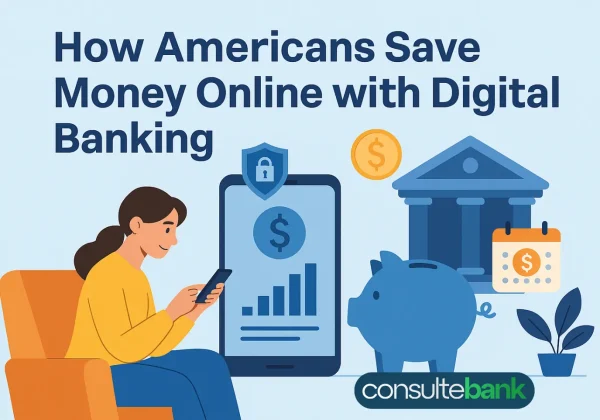
Digital banking has transformed the way Americans manage their money, largely because online platforms allow individuals to automate savings, minimize fees and monitor balances in real time. Furthermore, the shift toward mobile-first experiences means that users can take action instantly, even during short breaks at work or while commuting.
The most popular savings features include:
- Automatic transfers from checking to savings.
- Round-up programs that convert spare change into savings.
- High-yield online savings accounts with competitive rates.
- Goal-based digital envelopes.
- AI-based guidance for spending and saving behavior.
These tools rely on secure systems regulated by the Federal Deposit Insurance Corporation (FDIC) and consumer-protection standards maintained by the Consumer Financial Protection Bureau (CFPB). Therefore, users gain confidence while adopting new financial technologies.
Digital Tools That Encourage Online Savings
Because digital banks compete intensely for users, many platforms offer features that promote consistent savings.
High-Yield Online Savings Accounts
Digital banks frequently offer higher interest rates than traditional banks, mainly because they do not maintain physical branches. Consequently, they can allocate more financial resources toward competitive Annual Percentage Yields (APYs). According to the Federal Reserve, online-only institutions tend to provide above-average rates due to lower operational expenses.
Automated Savings and Round-Up Features
Automatic savings tools have become a major driver of user engagement. Applications like Chime or SoFi enable consumers to round up debit card purchases and transfer the difference into savings accounts. Although small at first, these micro-transfers accumulate significantly over time.
No-Fee Accounts and Low-Cost Services
Because many digital banks operate with streamlined structures, they often remove or reduce fees associated with overdrafts, maintenance and transfers. As a result, users can keep more of their money. Platforms regulated by the FDIC ensure that deposits remain insured up to $250,000, giving users more confidence.
How Americans Save Money Online Using Mobile-First Banking
Mobile banking applications represent the primary environment where savings actually happen. Moreover, app-based dashboards help users track financial goals through visual progress bars, monthly reports and automated alerts.
Budgeting Tools and Expense Categories
Digital platforms frequently include built-in budgeting systems that categorize spending habits. Because users can see patterns clearly, they can identify areas where they can reduce spending and redirect funds to savings.
Key features include:
- Monthly expense summaries
- Alerts for unusual transactions
- AI-driven recommendations
- Personalized financial goals
- Spending limit controls
These elements support financial discipline and promote consistent savings behavior over time.
Mobile Alerts and Behavioral Nudges
Behavioral nudges, inspired by behavioral economics, encourage users to adjust small habits gradually. Notifications remind users to save a specific amount, avoid unnecessary purchases or meet weekly savings targets. Therefore, digital banking becomes not just a tool, but a behavioral support system.
Security Structures That Enable Online Savings
Because online transactions involve sensitive data, strong regulation is essential. Digital banking systems in the United States follow strict security protocols enforced by agencies such as:
- FDIC, which insures deposits.
- CFPB, which monitors consumer protections.
- Federal Reserve, which regulates bank operations.
- U.S. Treasury, which oversees the financial system.
These standards ensure encryption, fraud monitoring, identity verification and continuous auditing. Consequently, users can trust digital savings tools without compromising safety.
Trends Shaping the Future of Online Savings
Technological expansion continues to reshape financial behavior. Several trends influence how Americans save money online:
AI-Based Financial Assistance
Artificial intelligence now evaluates user habits to predict spending patterns, identify overspending risks and recommend personalized savings strategies.
Open Banking Integrations
Open banking allows consumers to connect multiple financial accounts securely across platforms. Therefore, they gain a more holistic view of their finances, which improves their ability to save.
Instant Transfers and Real-Time Deposits
With real-time payment systems expanding nationwide, users can move money between accounts instantly. This enables faster savings actions and reduces friction in financial planning.
Increased Competition Among Digital Banks
Because more institutions are joining the digital banking market, customers benefit from better APYs, lower fees and innovative savings features.
Practical Ways Americans Can Strengthen Their Online Savings
Although tools are essential, behavior remains crucial. Therefore, it helps to follow practical steps consistently.
1. Automate Everything Possible
Automation removes the emotional friction that interferes with saving. Users can set weekly or monthly transfers and forget about the process.
2. Use High-Yield Accounts for All Saved Money
This ensures that savings earn more interest over time. Digital banks often publish updated APYs transparently on their websites.
3. Monitor Spending Weekly
Because spending habits evolve quickly, consistent monitoring is necessary. Budgeting dashboards help identify issues early.
4. Set Specific Financial Goals
Digital envelopes and goal-based dashboards encourage commitment by visually tracking progress.
5. Review Bank Fees Regularly
Even small fees, when accumulated, can reduce long-term savings. Therefore, choosing low-fee platforms is essential.
Why Digital Banking Is a Powerful Savings Ally
Digital banking improves financial accessibility, increases transparency and offers tools that simplify financial decision-making. Although each user has different needs, the combination of automation, security and competitive interest rates creates an environment where saving becomes far more achievable.
Because these platforms remain regulated and continuously evaluated, users can confidently adopt new digital habits. As digital ecosystems evolve, savings opportunities become increasingly diverse and effective.
Conclusão
Digital banking continues to redefine how Americans save money online, primarily because it simplifies complex decisions and encourages financial discipline. Moreover, secure infrastructures and regulatory oversight ensure that users can rely on these tools without compromising safety.
Consequently, digital banks are likely to remain at the center of future financial strategies, offering transparency, convenience and powerful savings mechanisms.
Fontes para consulta
- https://www.fdic.gov/
- https://www.consumerfinance.gov/
- https://www.federalreserve.gov/
- https://home.treasury.gov/
- https://www.sofi.com/
- https://www.chime.com/
- https://www.varomoney.com/
📌 Leia também:
Best Credit Cards Best Digital Banks in the USA No annual fee cards USA👉 Continue lendo o Consulte Bank